Revolutionizing Range: Case Studies and Success Stories in Electric Vehicle Performance Revolutionizing Range
Introduction to Electric Vehicle Range
The concept of range in electric vehicles (EVs) refers to the maximum distance an electric vehicle can travel on a single charge. This metric is of paramount importance for potential buyers, as it directly affects usability, convenience, and overall ownership satisfaction. A higher range not only alleviates range anxiety—an often-cited concern for prospective EV owners—but also enhances the practicality of these vehicles in daily life.
Range is typically measured under standardized testing conditions, such as the Worldwide Harmonized Light Vehicles Test Procedure (WLTP) in Europe or the Environmental Protection Agency (EPA) testing in the United States. These testing methods assess various factors, including speed, acceleration, and energy consumption, to present more realistic range estimates for consumers. However, it is essential to note that real-world factors such as driving habits, terrain, temperature, and the use of auxiliary systems (like climate control) can significantly impact an electric vehicle’s range.
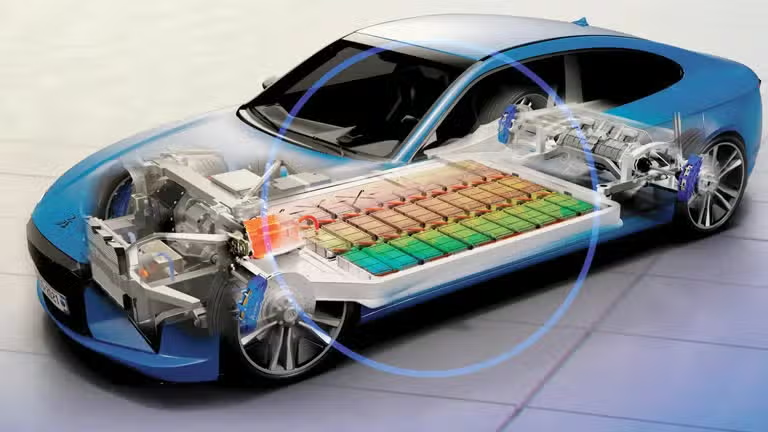
As the automotive industry continues to evolve, advancements in battery technology are playing a crucial role in enhancing the range capabilities of modern electric vehicles. Lithium-ion batteries, which have dominated the market, are now being improved through innovations such as increased energy density, faster charging times, and reduced weight. Furthermore, researchers are exploring alternative chemistries, like solid-state batteries, which promise even greater efficiency and longevity. Innovations in battery management systems and regenerative braking technology also contribute to extending the distance an EV can travel on a single charge.
Ultimately, understanding the significance of range is vital for potential electric vehicle buyers and for the broader goal of promoting sustainable transportation. As technology matures, the barriers to adoption are gradually diminishing, making electric vehicles more appealing and practical options for everyday users.
The Importance of Range in Electric Vehicles
The range of electric vehicles (EVs) significantly impacts the consumer experience, influencing both purchasing decisions and everyday use. Range refers to the distance an electric vehicle can travel on a single charge, and it is a fundamental aspect that potential buyers consider before making a purchase. As EVs become more mainstream, the importance of range is underscored by the phenomenon known as “range anxiety,” which is the fear that a vehicle has insufficient charge to reach its destination. This concern can deter potential buyers from considering electric options, reflecting a critical barrier that manufacturers strive to overcome.
Market research reveals that consumers prioritize range alongside cost and charging availability when evaluating electric vehicles. A survey conducted in 2023 indicated that approximately 70% of potential EV buyers consider range a crucial factor affecting their decision-making process. When asked about their ideal range, many respondents stated a preference for vehicles that can comfortably travel over 300 miles on a single charge—a threshold that many modern electric models now meet or exceed. This shift in consumer expectation is prompting automotive manufacturers to innovate and improve battery technology, increasing the range of their offerings while simultaneously addressing range anxiety.
The push for greater electric vehicle range is further supported by ongoing advancements in battery technology, which can enhance both performance and efficiency. As the range continues to evolve, manufacturers are recognizing the need to communicate their innovations effectively to consumers. This involves not just promoting technical specifications but also fostering a better understanding of the real-world performance of electric vehicles. As a result, addressing the critical role of range in electric vehicles is essential for manufacturers aiming to penetrate this rapidly growing market and mitigate concerns surrounding long-distance travel in EVs.
Case Study 1: Tesla Model S – Redefining Expectations
The Tesla Model S has emerged as a benchmark in the electric vehicle (EV) market, setting new standards for performance and range since its introduction. Launched in 2012, the Model S revolutionized the electric driving experience through innovative battery technology and advanced design features. With a sizeable lithium-ion battery pack, the Model S offers an impressive range of over 370 miles on a single charge, depending on the variant, making it one of the longest-range electric vehicles available today.
A significant aspect of the Model S’s performance is its battery management system, which optimizes energy consumption and extends range. Tesla’s proprietary architecture enables efficient energy delivery from the battery to the electric motors, ensuring cooperation between components for peak performance. This technology not only enhances the vehicle’s acceleration, allowing it to go from 0 to 60 mph in as little as 1.99 seconds, but also supports consistent performance over long distances, a critical factor for many users.
Real-world testing has further validated the Model S’s capabilities. Owners frequently report achieving ranges that match or exceed EPA estimates, underscoring Tesla’s commitment to performance and customer satisfaction. User testimonials highlight the convenience of long-distance travel, often describing cross-country road trips where charging stations were minimal and the range provided peace of mind.
Additionally, Tesla has continually introduced over-the-air software updates, which enhance not only safety features but also improve vehicle efficiency, thereby contributing to the overall range. Features like regenerative braking allow drivers to recover energy during deceleration, further extending the driving distance between charges. Through these innovations and real-world success stories, the Tesla Model S has not only redefined expectations but also set the stage for future advancements in electric vehicle range.
Case Study 2: Lucid Air – Luxury and Longevity
The Lucid Air, an all-electric luxury sedan manufactured by Lucid Motors, has set a new standard in the electric vehicle sector by achieving an impressive range of over 500 miles on a single charge. This remarkable range is primarily attributed to the advanced engineering solutions and innovative battery management systems employed in the vehicle’s design. The Lucid Air utilizes a high-capacity lithium-ion battery pack, which is structured to optimize energy density while ensuring safety and longevity. This cutting-edge battery technology allows for extended driving distances, catering to the needs of consumers seeking both luxury and functionality in their electric vehicles.
Aesthetically, the Lucid Air also incorporates aerodynamic designs that significantly contribute to its overall efficiency. The vehicle’s sleek silhouette, paired with sophisticated airflow management strategies, minimizes wind resistance, thereby enhancing its performance and extending its range. The careful attention to aerodynamics not only improves speed and efficiency but also elevates the vehicle’s visual appeal, solidifying its position in the luxury EV market.
In addition to these engineering and design innovations, the Lucid Air boasts several high-end features that further enhance the driving experience while maximizing range comfort. The vehicle is equipped with an advanced thermal management system that regulates battery temperature and contributes to its longevity. Moreover, a comprehensive suite of intelligent driving aids enhances the overall user experience, allowing for a seamless transition between different driving modes while judiciously managing energy consumption.
Overall, the Lucid Air exemplifies how a luxury electric vehicle can successfully balance exceptional range and comfort, all while embracing a sustainable future. This combination of advanced technology and thoughtful design makes it a compelling choice for discerning consumers in the EV market.
Case Study 3: Ford Mustang Mach-E – Bridging the Gap
The Ford Mustang Mach-E marks a significant milestone in Ford’s transition from traditional combustion engines to electric vehicles, appealing to both loyal Mustang enthusiasts and new customers. Introduced as an all-electric SUV, the Mach-E delivers an impressive range of up to 300 miles, depending on the configuration. This range is a critical feature that allows consumers to experience the freedom of electric driving without the fear of running out of power. Various configurations, including rear-wheel drive and all-wheel drive options, enable drivers to choose performance levels that suit their preferences, aligning the vehicle with the Mustang brand’s high-performance legacy.
Ford’s strategic approach to marketing the Mach-E highlights the importance of appealing to traditional car enthusiasts while simultaneously attracting a new demographic of environmentally-conscious consumers. The company effectively bridged the gap between classic muscle car culture and modern sustainability goals. In addition to utilizing the familiar Mustang branding, Ford introduced performance features such as instant torque and advanced handling dynamics. This ensured that even the most devoted fans of combustion engines could appreciate the exhilarating driving experience the Mach-E offers.
Consumer experiences with the Mach-E have been overwhelmingly positive, as evidenced by numerous online reviews and testimonials. Users highlight the vehicle’s innovative technology, including a user-friendly infotainment system that integrates seamlessly with smart devices. The spacious interior and cargo capacity further enhance the appeal, making the Mach-E a practical choice for families. Market reception has also been strong, with the Mach-E receiving accolades from automotive critics and industry awards. Ford’s successful execution of the Mach-E demonstrates that electric vehicles can maintain the exciting performance characteristics associated with traditional muscle cars, paving the way for a sustainable future in automotive design.
Case Study 4: Hyundai Ioniq 5 – Innovation in Utility
The Hyundai Ioniq 5 exemplifies a remarkable advance in electric vehicle performance, as it integrates innovative design, ample interior space, and impressive range capabilities. This vehicle represents Hyundai’s commitment to electrification and showcases how the automotive industry is evolving to meet consumers’ demands for utility without sacrificing environmental responsibility. The Ioniq 5 is built on an Electric-Global Modular Platform (E-GMP), allowing for a unique combination of practicality and efficiency.
One of the standout features of the Hyundai Ioniq 5 is its spacious interior. With a flat floor and flexible seating options, the vehicle can comfortably accommodate up to five passengers, making it suitable for family outings or securing substantial storage for long trips. The design emphasizes user convenience, thanks to the plethora of smart storage solutions, like underfloor compartments and rear seats that recline, fostering a relaxing environment during journeys.
In terms of its electric performance, the Hyundai Ioniq 5 boasts a range that stands out in the competitive electric vehicle market. Utilizing a cutting-edge battery technology, this model offers a range of over 300 miles on a single charge, making it a reliable option for both daily commuting and longer drives. Real-world user experiences reveal a consistent pattern of satisfaction regarding the vehicle’s performance in diverse conditions, seamlessly blending range longevity with practicality. The rapid charging capability further enhances its utility, allowing drivers to rejuvenate their battery in minimal time.
The Hyundai Ioniq 5 effectively challenges the traditional perceptions of electric vehicles by offering innovative solutions in both design and functionality, ultimately contributing to a broader acceptance of electric mobility. This case study demonstrates how manufacturers can effectively balance range performance with user-centric design, encouraging a sustainable automotive future.
Technological Innovations Driving Range Improvement
The advancement of electric vehicles (EVs) hinges significantly on various technological innovations aimed at enhancing vehicle range. A pivotal area of focus is battery chemistry. Recent breakthroughs in solid-state batteries have generated considerable interest. These batteries replace traditional liquid electrolytes with a solid alternative, promising greater energy density and improved safety. Companies like Toyota and QuantumScape are at the forefront of this research, indicating the potential for batteries that not only extend the range of electric vehicles but also reduce charging times dramatically.
In parallel to battery improvements, electric motors have evolved considerably. The shift toward more efficient motor designs, such as axial-flux motors, allows for a greater range due to lower energy consumption and higher torque. This type of motor has demonstrated values in various applications, promising significant range increases while maintaining a compact form factor. Innovators like YASA, a spin-off from the University of Oxford, exemplify how advanced motor designs can play a crucial role in elevating performance standards for EVs.
Regenerative braking systems further enhance range by recapturing energy that would otherwise be lost during deceleration. By utilizing this energy to recharge the battery, manufacturers can extend the range of electric vehicles, displaying a delicate balance between innovation and energy efficiency. Tesla has integrated such systems effectively, consistently improving the range of their models with every iteration through software and hardware enhancements.
Aerodynamics is another critical factor influencing electric vehicle performance. Streamlined designs minimize drag, which directly impacts range. Companies are investing heavily in computational fluid dynamics to analyze and refine vehicle shapes more effectively. For instance, the Mercedes EQS exemplifies how optimizing vehicle aerodynamics can contribute to increased range while simultaneously enhancing aesthetic appeal.
User Perspectives on Electric Vehicle Range
The journey of electric vehicle (EV) ownership offers a unique lens through which to examine real-world range performance. Many EV owners report experiencing a significant change in their commuting habits and overall lifestyle once they transition to electric mobility. Testimonials collected from a diverse demographic—urban commuters, long-distance travelers, and rural residents—provide valuable insights into the practicality of EV range in everyday life.
One common challenge that users face is managing their charging routines. For instance, urban dwellers often express concerns regarding charging infrastructure. Despite the availability of public charging stations, many find it more convenient to install home chargers, which alleviates range anxiety. One EV owner noted that their daily commute rarely exceeds 30 miles, allowing them to maintain a charge without relying heavily on public stations, hence extending their vehicle’s effective range.
Conversely, users who take long road trips frequently discuss the importance of planning ahead. Many adopt strategies that involve identifying charging stations along their routes or timing their stops to coincide with breaks, ensuring they maximize their driving distance. A long-distance traveler shared that integrating charging breaks into their journey transformed the experience, turning potential frustrations into opportunities for rest and exploration.
Satisfaction levels among different demographic groups vary significantly, with many EV drivers expressing enthusiasm for reduced fuel costs and environmental impact. However, challenges related to range and charging access continue to influence ownership experiences. Younger, tech-savvy drivers seem generally more adaptable, while older drivers often express concerns about the technology’s reliability. This disparity underscores the importance of understanding user perspectives to promote wider acceptance of electric vehicles, ultimately enhancing the overall EV ecosystem.
Future Trends for EV Range Enhancement
The future of electric vehicle (EV) range enhancement is poised to undergo a significant transformation, driven by rapid technological advancements and strategic policy initiatives. One of the most promising developments is the emergence of solid-state batteries. Unlike conventional lithium-ion batteries, solid-state batteries utilize a solid electrolyte, which allows for higher energy density, faster charging times, and improved safety. This innovation could effectively double the range of electric vehicles, addressing one of the most significant barriers faced by potential EV buyers: range anxiety.
In parallel with advancements in battery technology, the expansion and enhancement of charging infrastructure play a crucial role in the future of EVs. The establishment of ultra-fast charging stations, capable of delivering significant power in a brief period, will alleviate concerns surrounding charging times. Autonomous charging technology, such as wireless charging, is also on the horizon, which could simplify the user experience and further enhance the practicality of owning an electric vehicle. Such advancements will not only attract new consumers but also encourage the current EV owners to leverage their vehicles more effectively.
Environmental considerations are increasingly central to the discourse surrounding EV range enhancement. Many researchers and organizations are exploring sustainable methods to produce batteries, minimizing the ecological footprint associated with mining raw materials. Furthermore, the integration of renewable energy sources within charging infrastructure, such as solar and wind power, can significantly reduce overall emissions attributable to electric vehicles. Policy efforts are also beginning to align with these environmental goals by incentivizing innovation and establishing stringent sustainability guidelines for battery production.
In conclusion, the future of electric vehicle range enhancement looks promising, as solid-state batteries, improved charging infrastructures, and environmentally conscious policies come together to create a new era of transportation. These advancements will not only transform the EV market but will also contribute to broader sustainability efforts, ensuring a cleaner, greener future for all. The interplay between technology and policy will be crucial in realizing these aspirations and fostering a well-rounded approach to electric mobility.
Conclusion: The Road Ahead for Electric Vehicle Range
As we explore the burgeoning realm of electric vehicles (EVs), it becomes increasingly evident that the evolution of EV range is pivotal to their widespread adoption. Case studies from various manufacturers illustrate not only the advancements in battery technology—such as lithium-sulfur and solid-state batteries—but also the innovative strategies employed to enhance overall vehicle efficiency. These developments underscore the commitment of the industry to overcome past limitations related to range anxiety among consumers.
Moreover, the significance of consumer education cannot be overstated. As manufacturers introduce vehicles with extended range capabilities, potential buyers need to understand the technology and infrastructure that support the modern electric vehicle. With a comprehensive grasp of range optimization strategies, including regenerative braking and energy-efficient driving patterns, consumers will be better equipped to maximize their driving experience. The integration of smart charging solutions and the expansion of charging networks further reinforce the notion that electric vehicles can serve as practical choices for everyday transportation.
As we look ahead, it becomes clear that innovation will remain at the forefront of the electric vehicle sector. Companies continue to push the boundaries of performance, aiming to offer models that not only meet but exceed consumer expectations in terms of range and efficiency. The interplay between technological advancement and consumer awareness is crucial to the growth of this market. As electric vehicles transition from niche products to mainstream choices, they will not only be viewed as sustainable alternatives but also as sophisticated technological advancements that are redefining mobility across the globe.